Domain kunststoff-apparate.de kaufen?
Wir ziehen mit dem Projekt
kunststoff-apparate.de um.
Sind Sie am Kauf der Domain
kunststoff-apparate.de interessiert?
domain@kv-gmbh.de · 0541-91531010
Domain kunststoff-apparate.de kaufen?
Warum ergeben 10 ml Spiritus und 10 ml destilliertes Wasser keine 20 ml Flüssigkeit?
Wenn Spiritus und destilliertes Wasser gemischt werden, findet eine Volumenkontraktion statt. Das bedeutet, dass die Moleküle des Spiritus und des Wassers enger zusammenrücken und somit weniger Platz einnehmen. Dadurch ergibt die Mischung von 10 ml Spiritus und 10 ml destilliertem Wasser keine 20 ml Flüssigkeit, sondern etwas weniger. **
Ist 10 ml ein Zehntel eines Liters, also 10 mal 10 ml gleich 1 Liter?
Ja, 10 ml ist ein Zehntel eines Liters. Wenn man 10 mal 10 ml nimmt, ergibt das 100 ml, was einem Zehntel eines Liters entspricht. Um 1 Liter zu erhalten, müsste man 1000 ml haben. **

Ähnliche Suchbegriffe für 10-ml-Neroli-Dilute
Top-Angebote
Produkte zum Begriff 10-ml-Neroli-Dilute:
-
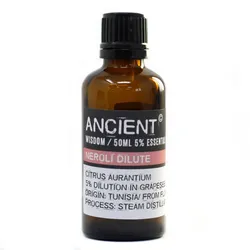
Neroli Dilute 50ml Essential OilLatin Name : Citrus AurantiumPart Of Plant Used : FlowerSource : TunisiaExtraction Method : Steam Distillation5% Dilution in Grapeseed OilNeroli oil is produced from the flowers of the bitter orange tree (Citrus aurantium var. amara), also known as Neroli bigarade, and smells similar to bergamot. The blossoms are gathered by hand and the oil is produced by water distillation as the flowers are too fragile for steam distillation. This is one of the most popular essential oils for its wonderful smell as well as its therapeutic properties.Neroli Essential Oil is very calming and is said to relieve chronic anxiety, depression, fear, depression, shock and stress. It is believed to calm intestinal spasms, colitis and diarrhoea as well. Due to its sedative property, it is good for insomnia, people with heart palpitations, neuralgia, and vertigo. It is good to heat some in an oil burner in a convalescent's room. On the skin, Neroli oil is said to help regenerate skin cells and useful to prevent ugly scar tissue, promote smoother skin, fight stretch marks, and broken capillaries.Neroli oil is believed to have been used by the Romans. In 1680, Anna Maria Orsini, princess of Nerola, used the essence of the bitter orange tree as to perfume her gloves and her bath, thereby creating a fashionable new fragrance. From this time on, the essential oil became known as Neroli after her. The oil is expensive to produce, and much care is taken as the blossoms must be plucked just as they bloom.18,13 €*Versand: 5,85 €Sichere Weiterleitung zum Anbieter
-
10 ml Rose Dilute Essential OilLatin Name: Rosa CentifoliaPart of Plant Used: PetalsSource: MoroccoExtraction Method: Solvent Extract5% Dilution in Grapeseed OilRose Dilute Essential Oil is more than just a pretty floral scent. It has several therapeutic properties that makes it amazing in skincare products. It has several therapeutic properties, including antidepressant, antiseptic, astringent, calmative and sedative. Rose Dilute Essential Oil is known for its antidepressant agents. It helps boost confidence, mental health and fights depression!Most acne occurs, when there is an overproduction of sebum in a person's pores, but increased bacteria plays a huge part in the development of acne, too. Luckily, Rose Dilute Essential Oil has several properties that will reduce acne, including astringent, antiviral, as well as bactericidal.NB: Our Essential Oils are not suitable for internal use.7,50 €*Versand: 5,85 €Sichere Weiterleitung zum Anbieter
-
10 ml Jasmine Dilute Essential OilLatin Name : Jasminum OfficinalePart of Plant Used : Dried LeavesSource : IndiaExtraction Method : Steam Distillation5% Dilution in Grapeseed OilIt may be the aphrodisiac properties that placed jasmine oil in such high demand throughout history. Jasmine essential oil was used in healing and religious ceremonies because of this compelling quality. In China, jasmine oil was used in sick rooms to make the air fragrant, but it was also thought to clear the air of pollutants even before the discovery of bacteria. Ancient Egyptians used jasmine oil for headaches, nervous disorders, and to promote restful sleep.Today, the essence is produced through a process called solvent extraction. At first glance, jasmine is all about scent. Its complex, floral energy is a mood-lifter for most people and often provides aphrodisiac qualities. Studies have shown that just smelling jasmine can increase alertness, hand-eye coordination, boost self-confidence, and happiness, and reduce stress.In a therapeutic sense, jasmine can treat dry, aging skin. It is used in low concentrations to treat eczema and dermatitis. Additionally, jasmine is useful in fading scars and treating stretch marks after delivery. Jasmine can relieve anger, anxiety, and stress without acting as a sedative. Jasmine opens one up to options available through clearer thinking. This calming and balancing power can also reduce inflammation from emotional stress.Jasmine has a long history of enhancing libido, releasing inhibitions, and inspiring sexual desire. Jasmine has properties which regulate period cycles, can reduce period pain, lethargy, and mood swings. It can also delay the onset of menopause.10,31 €*Versand: 5,85 €Sichere Weiterleitung zum Anbieter
-
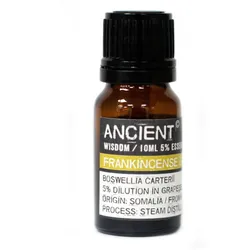
10 ml Frankincense (Dilute) Essential OilLatin Name : Boswellia CarteriiPart Of Plant Used : ResinSource : OmanExtraction Method : Steam Distillation5% Dilution in Grapeseed OilFrankincense Essential Oil is steam distilled from the resin of the Boswellia carterii tree, of the Burseraceae family, and is also known as Olibanum. The word is derived from the French franc meaning luxuriant, and was, along with myrrh, the first gum to be used as incense. The tree is indigenous to the Middle East, and is said to exist in natural bonsai formation in that parched land. Frankincense is said to symbolize divinity.This oil is the most popular in aromatherapy for its calming properties. It is said to help heal wounds and prevent scars. It is used to tone the face, remove wrinkles, and avoid stretch marks in cosmetic products. Frankincense essential oil has been used to ease anxiety, stress, asthma, bronchitis, laryngitis, and bad coughs. It is a general tonic to the uterus, has a calming effect during labour, and helps ease heavy menstruation. It is most useful during meditation. Avoid during pregnancy.Ancient Egyptians burned frankincense as holy incense and used it as a face mask. They ground the burnt resin into a powder called kohl, used to highlight the eyes. Kohl-lined eyes are commonly seen in Egyptian art. The earliest record of frankincense use was found in a tomb inscription of the 15th century BC Egyptian queen Hatshepsut. It was used to fumigate the sick, to banish evil spirits.3,13 €*Versand: 5,85 €Sichere Weiterleitung zum Anbieter


-
Was entspricht 10 ml?
Was entspricht 10 ml? 10 ml entspricht einem Volumen von 10 Kubikzentimetern oder einem Zehntel eines Deziliters. Das entspricht auch ungefähr zwei Teelöffeln oder zwei Millilitern. In Bezug auf Flüssigkeiten kann man sich vorstellen, dass 10 ml etwa einem kleinen Schluck Wasser entsprechen. Es ist eine relativ kleine Menge, die jedoch je nach Kontext und Anwendungszweck eine wichtige Rolle spielen kann. **
-
Wie messe ich 10 ml und 20 ml ab?
Um 10 ml abzumessen, kannst du eine 10 ml-Messpipette oder eine Spritze verwenden. Fülle die Pipette oder Spritze mit der Flüssigkeit bis zur Markierung von 10 ml. Um 20 ml abzumessen, kannst du entweder zweimal eine 10 ml-Messpipette oder eine 20 ml-Messpipette verwenden und sie bis zur entsprechenden Markierung füllen. **
-
Wie viel ist 10 ml?
"10 ml entspricht 10 Millilitern, was eine Volumeneinheit ist. Um sich das besser vorstellen zu können, entspricht 10 ml etwa einem Esslöffel. In Bezug auf Flüssigkeiten ist 10 ml eine relativ kleine Menge, die oft für Medikamente, Gewürze oder Aromen verwendet wird. Es ist wichtig, genau zu messen, wenn man mit kleinen Mengen arbeitet, um die gewünschten Ergebnisse zu erzielen." **
-
Welches Mischverhältnis von Aromazuckerwatte (5-10 ml) auf 100 ml Base?
Das Mischverhältnis von Aromazuckerwatte auf Base beträgt 5-10 ml Aromazuckerwatte auf 100 ml Base. Dies bedeutet, dass du zwischen 5 und 10 ml Aromazuckerwatte in 100 ml Base mischen solltest, um das gewünschte Geschmackserlebnis zu erzielen. **

Wie viele Tropfen sind 10 ml?
Wie viele Tropfen 10 ml entsprechen, hängt von der Dichte der Flüssigkeit ab. Bei Wasser beträgt die Umrechnung ungefähr 20 Tropfen pro Milliliter. Daher wären es bei 10 ml etwa 200 Tropfen. Allerdings kann diese Zahl je nach Flüssigkeit variieren. Es ist daher ratsam, die genaue Umrechnung für die spezifische Flüssigkeit zu recherchieren. Es gibt auch spezielle Pipetten oder Tropfflaschen, die eine genauere Dosierung ermöglichen. **
Was sind 10 ml in Gramm?
Was sind 10 ml in Gramm? Die Umrechnung von Millilitern (ml) in Gramm hängt von der Dichte der Substanz ab. Da die Dichte verschiedener Flüssigkeiten unterschiedlich ist, kann man nicht pauschal sagen, wie viele Gramm 10 ml einer bestimmten Flüssigkeit wiegen. Um die genaue Masse in Gramm zu berechnen, muss man die Dichte der Flüssigkeit kennen und die Formel Masse = Volumen x Dichte anwenden. Daher ist es wichtig, die spezifische Dichte der Flüssigkeit zu berücksichtigen, um die Masse in Gramm zu bestimmen. **
Top-Angebote
Produkte zum Begriff 10-ml-Neroli-Dilute:
-
10 ml Neroli Dilute Essential OilLatin Name : Citrus AurantiumPart Of Plant Used : FlowerSource : TunisiaExtraction Method : Steam Distillation5% Dilution in Grapeseed OilNeroli oil is produced from the flowers of the bitter orange tree (Citrus aurantium var. amara), also known as Neroli bigarade, and smells similar to bergamot. The blossoms are gathered by hand and the oil is produced by water distillation as the flowers are too fragile for steam distillation. This is one of the most popular essential oils for its wonderful smell as well as its therapeutic properties.Neroli Essential Oil is very calming and is said to relieve chronic anxiety, depression, fear, depression, shock and stress. It is believed to calm intestinal spasms, colitis and diarrhoea as well. Due to its sedative property, it is good for insomnia, people with heart palpitations, neuralgia, and vertigo. It is good to heat some in an oil burner in a convalescent's room. On the skin, Neroli oil is said to help regenerate skin cells and useful to prevent ugly scar tissue, promote smoother skin, fight stretch marks, and broken capillaries.Neroli oil is believed to have been used by the Romans. In 1680, Anna Maria Orsini, princess of Nerola, used the essence of the bitter orange tree as to perfume her gloves and her bath, thereby creating a fashionable new fragrance. From this time on, the essential oil became known as Neroli after her. Folk tales say that these orange blossoms were used to decorate bridal beds to help relax newly married couples in bed. The oil is expensive to produce, and much care is taken as the blossoms must be plucked just as they bloom.4,94 €*Versand: 5,85 €Sichere Weiterleitung zum Anbieter
-
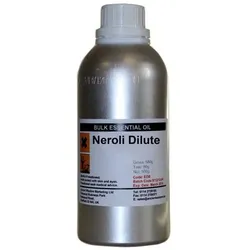
Neroli Dilute 0.5KgLatin Name : Citrus AurantiumPart Of Plant Used : FlowerSource : TunisiaExtraction Method : Steam Distillation5% Dilution in Grapeseed OilNeroli oil is produced from the flowers of the bitter orange tree (Citrus aurantium var. amara), also known as Neroli bigarade, and smells similar to bergamot. The blossoms are gathered by hand and the oil is produced by water distillation as the flowers are too fragile for steam distillation. This is one of the most popular essential oils for its wonderful smell as well as its therapeutic properties.Neroli Essential Oil is very calming and is said to relieve chronic anxiety, depression, fear, depression, shock and stress. It is believed to calm intestinal spasms, colitis and diarrhoea as well. Due to its sedative property, it is good for insomnia, people with heart palpitations, neuralgia, and vertigo. It is good to heat some in an oil burner in a convalescent's room. On the skin, Neroli oil is said to help regenerate skin cells and useful to prevent ugly scar tissue, promote smoother skin, fight stretch marks, and broken capillaries.75,79 €*Versand: 5,85 €Sichere Weiterleitung zum Anbieter
-
Neroli Dilute 50ml Essential OilLatin Name : Citrus AurantiumPart Of Plant Used : FlowerSource : TunisiaExtraction Method : Steam Distillation5% Dilution in Grapeseed OilNeroli oil is produced from the flowers of the bitter orange tree (Citrus aurantium var. amara), also known as Neroli bigarade, and smells similar to bergamot. The blossoms are gathered by hand and the oil is produced by water distillation as the flowers are too fragile for steam distillation. This is one of the most popular essential oils for its wonderful smell as well as its therapeutic properties.Neroli Essential Oil is very calming and is said to relieve chronic anxiety, depression, fear, depression, shock and stress. It is believed to calm intestinal spasms, colitis and diarrhoea as well. Due to its sedative property, it is good for insomnia, people with heart palpitations, neuralgia, and vertigo. It is good to heat some in an oil burner in a convalescent's room. On the skin, Neroli oil is said to help regenerate skin cells and useful to prevent ugly scar tissue, promote smoother skin, fight stretch marks, and broken capillaries.Neroli oil is believed to have been used by the Romans. In 1680, Anna Maria Orsini, princess of Nerola, used the essence of the bitter orange tree as to perfume her gloves and her bath, thereby creating a fashionable new fragrance. From this time on, the essential oil became known as Neroli after her. The oil is expensive to produce, and much care is taken as the blossoms must be plucked just as they bloom.18,13 €*Versand: 5,85 €Sichere Weiterleitung zum Anbieter
-
10 ml Rose Dilute Essential OilLatin Name: Rosa CentifoliaPart of Plant Used: PetalsSource: MoroccoExtraction Method: Solvent Extract5% Dilution in Grapeseed OilRose Dilute Essential Oil is more than just a pretty floral scent. It has several therapeutic properties that makes it amazing in skincare products. It has several therapeutic properties, including antidepressant, antiseptic, astringent, calmative and sedative. Rose Dilute Essential Oil is known for its antidepressant agents. It helps boost confidence, mental health and fights depression!Most acne occurs, when there is an overproduction of sebum in a person's pores, but increased bacteria plays a huge part in the development of acne, too. Luckily, Rose Dilute Essential Oil has several properties that will reduce acne, including astringent, antiviral, as well as bactericidal.NB: Our Essential Oils are not suitable for internal use.7,50 €*Versand: 5,85 €Sichere Weiterleitung zum Anbieter
-
Warum ergeben 10 ml Spiritus und 10 ml destilliertes Wasser keine 20 ml Flüssigkeit?
Wenn Spiritus und destilliertes Wasser gemischt werden, findet eine Volumenkontraktion statt. Das bedeutet, dass die Moleküle des Spiritus und des Wassers enger zusammenrücken und somit weniger Platz einnehmen. Dadurch ergibt die Mischung von 10 ml Spiritus und 10 ml destilliertem Wasser keine 20 ml Flüssigkeit, sondern etwas weniger. **
-
Ist 10 ml ein Zehntel eines Liters, also 10 mal 10 ml gleich 1 Liter?
Ja, 10 ml ist ein Zehntel eines Liters. Wenn man 10 mal 10 ml nimmt, ergibt das 100 ml, was einem Zehntel eines Liters entspricht. Um 1 Liter zu erhalten, müsste man 1000 ml haben. **
-
Was entspricht 10 ml?
Was entspricht 10 ml? 10 ml entspricht einem Volumen von 10 Kubikzentimetern oder einem Zehntel eines Deziliters. Das entspricht auch ungefähr zwei Teelöffeln oder zwei Millilitern. In Bezug auf Flüssigkeiten kann man sich vorstellen, dass 10 ml etwa einem kleinen Schluck Wasser entsprechen. Es ist eine relativ kleine Menge, die jedoch je nach Kontext und Anwendungszweck eine wichtige Rolle spielen kann. **
-
Wie messe ich 10 ml und 20 ml ab?
Um 10 ml abzumessen, kannst du eine 10 ml-Messpipette oder eine Spritze verwenden. Fülle die Pipette oder Spritze mit der Flüssigkeit bis zur Markierung von 10 ml. Um 20 ml abzumessen, kannst du entweder zweimal eine 10 ml-Messpipette oder eine 20 ml-Messpipette verwenden und sie bis zur entsprechenden Markierung füllen. **
Ähnliche Suchbegriffe für 10-ml-Neroli-Dilute
-
10 ml Jasmine Dilute Essential OilLatin Name : Jasminum OfficinalePart of Plant Used : Dried LeavesSource : IndiaExtraction Method : Steam Distillation5% Dilution in Grapeseed OilIt may be the aphrodisiac properties that placed jasmine oil in such high demand throughout history. Jasmine essential oil was used in healing and religious ceremonies because of this compelling quality. In China, jasmine oil was used in sick rooms to make the air fragrant, but it was also thought to clear the air of pollutants even before the discovery of bacteria. Ancient Egyptians used jasmine oil for headaches, nervous disorders, and to promote restful sleep.Today, the essence is produced through a process called solvent extraction. At first glance, jasmine is all about scent. Its complex, floral energy is a mood-lifter for most people and often provides aphrodisiac qualities. Studies have shown that just smelling jasmine can increase alertness, hand-eye coordination, boost self-confidence, and happiness, and reduce stress.In a therapeutic sense, jasmine can treat dry, aging skin. It is used in low concentrations to treat eczema and dermatitis. Additionally, jasmine is useful in fading scars and treating stretch marks after delivery. Jasmine can relieve anger, anxiety, and stress without acting as a sedative. Jasmine opens one up to options available through clearer thinking. This calming and balancing power can also reduce inflammation from emotional stress.Jasmine has a long history of enhancing libido, releasing inhibitions, and inspiring sexual desire. Jasmine has properties which regulate period cycles, can reduce period pain, lethargy, and mood swings. It can also delay the onset of menopause.10,31 €*Versand: 5,85 €Sichere Weiterleitung zum Anbieter
-
10 ml Frankincense (Dilute) Essential OilLatin Name : Boswellia CarteriiPart Of Plant Used : ResinSource : OmanExtraction Method : Steam Distillation5% Dilution in Grapeseed OilFrankincense Essential Oil is steam distilled from the resin of the Boswellia carterii tree, of the Burseraceae family, and is also known as Olibanum. The word is derived from the French franc meaning luxuriant, and was, along with myrrh, the first gum to be used as incense. The tree is indigenous to the Middle East, and is said to exist in natural bonsai formation in that parched land. Frankincense is said to symbolize divinity.This oil is the most popular in aromatherapy for its calming properties. It is said to help heal wounds and prevent scars. It is used to tone the face, remove wrinkles, and avoid stretch marks in cosmetic products. Frankincense essential oil has been used to ease anxiety, stress, asthma, bronchitis, laryngitis, and bad coughs. It is a general tonic to the uterus, has a calming effect during labour, and helps ease heavy menstruation. It is most useful during meditation. Avoid during pregnancy.Ancient Egyptians burned frankincense as holy incense and used it as a face mask. They ground the burnt resin into a powder called kohl, used to highlight the eyes. Kohl-lined eyes are commonly seen in Egyptian art. The earliest record of frankincense use was found in a tomb inscription of the 15th century BC Egyptian queen Hatshepsut. It was used to fumigate the sick, to banish evil spirits.3,13 €*Versand: 5,85 €Sichere Weiterleitung zum Anbieter
-
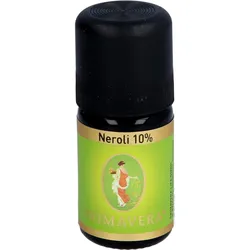
Neroli 10% 5 MLProdukteigenschaften: Primavera Neroli 10% Citrus aurantium ssp. amara 10%, Bio Weingeist 90% Neroli bezeichnet die Blüten des Bitterorangenbaum, einem Zitrusbaum, der in Sizilien, Nordafrika und Ägypten kultiviert wird. Der Bitterorangenbaum liefert 3 verschiedene Öle, Neroli aus den Blüten, Petit Grain aus Blättern und das Fruchtschalenöl. Neroliöl ist ein wertvoller Parfumrohstoff in der Naturheilkunde wird Neroli verwendet bei Hautproblemen und nervöser Anspannung. Anwendung: Kosmetikum zur Aromapflege der Haut. Max. 20 Tropfen in 50 ml Primavera Mandelöl bio. Ingredients: Alcohol, Citrus Aurantium Amara (Bitter Orange) Flower Extract, Farnesol**, Limonene**, Linalool**. ** natürliche Bestandteile des ätherischen Öls Quelle: www.primaveralife.com Stand: 09/202311,97 €*Versand: 4,50 €Sichere Weiterleitung zum Anbieter
-
Wie viel ist 10 ml?
"10 ml entspricht 10 Millilitern, was eine Volumeneinheit ist. Um sich das besser vorstellen zu können, entspricht 10 ml etwa einem Esslöffel. In Bezug auf Flüssigkeiten ist 10 ml eine relativ kleine Menge, die oft für Medikamente, Gewürze oder Aromen verwendet wird. Es ist wichtig, genau zu messen, wenn man mit kleinen Mengen arbeitet, um die gewünschten Ergebnisse zu erzielen." **
-
Welches Mischverhältnis von Aromazuckerwatte (5-10 ml) auf 100 ml Base?
Das Mischverhältnis von Aromazuckerwatte auf Base beträgt 5-10 ml Aromazuckerwatte auf 100 ml Base. Dies bedeutet, dass du zwischen 5 und 10 ml Aromazuckerwatte in 100 ml Base mischen solltest, um das gewünschte Geschmackserlebnis zu erzielen. **
-
Wie viele Tropfen sind 10 ml?
Wie viele Tropfen 10 ml entsprechen, hängt von der Dichte der Flüssigkeit ab. Bei Wasser beträgt die Umrechnung ungefähr 20 Tropfen pro Milliliter. Daher wären es bei 10 ml etwa 200 Tropfen. Allerdings kann diese Zahl je nach Flüssigkeit variieren. Es ist daher ratsam, die genaue Umrechnung für die spezifische Flüssigkeit zu recherchieren. Es gibt auch spezielle Pipetten oder Tropfflaschen, die eine genauere Dosierung ermöglichen. **
-
Was sind 10 ml in Gramm?
Was sind 10 ml in Gramm? Die Umrechnung von Millilitern (ml) in Gramm hängt von der Dichte der Substanz ab. Da die Dichte verschiedener Flüssigkeiten unterschiedlich ist, kann man nicht pauschal sagen, wie viele Gramm 10 ml einer bestimmten Flüssigkeit wiegen. Um die genaue Masse in Gramm zu berechnen, muss man die Dichte der Flüssigkeit kennen und die Formel Masse = Volumen x Dichte anwenden. Daher ist es wichtig, die spezifische Dichte der Flüssigkeit zu berücksichtigen, um die Masse in Gramm zu bestimmen. **
* Alle Preise verstehen sich inklusive der gesetzlichen Mehrwertsteuer und ggf. zuzüglich Versandkosten. Die Angebotsinformationen basieren auf den Angaben des jeweiligen Shops und werden über automatisierte Prozesse aktualisiert. Eine Aktualisierung in Echtzeit findet nicht statt, so dass es im Einzelfall zu Abweichungen kommen kann. ** Hinweis: Teile dieses Inhalts wurden von KI erstellt.